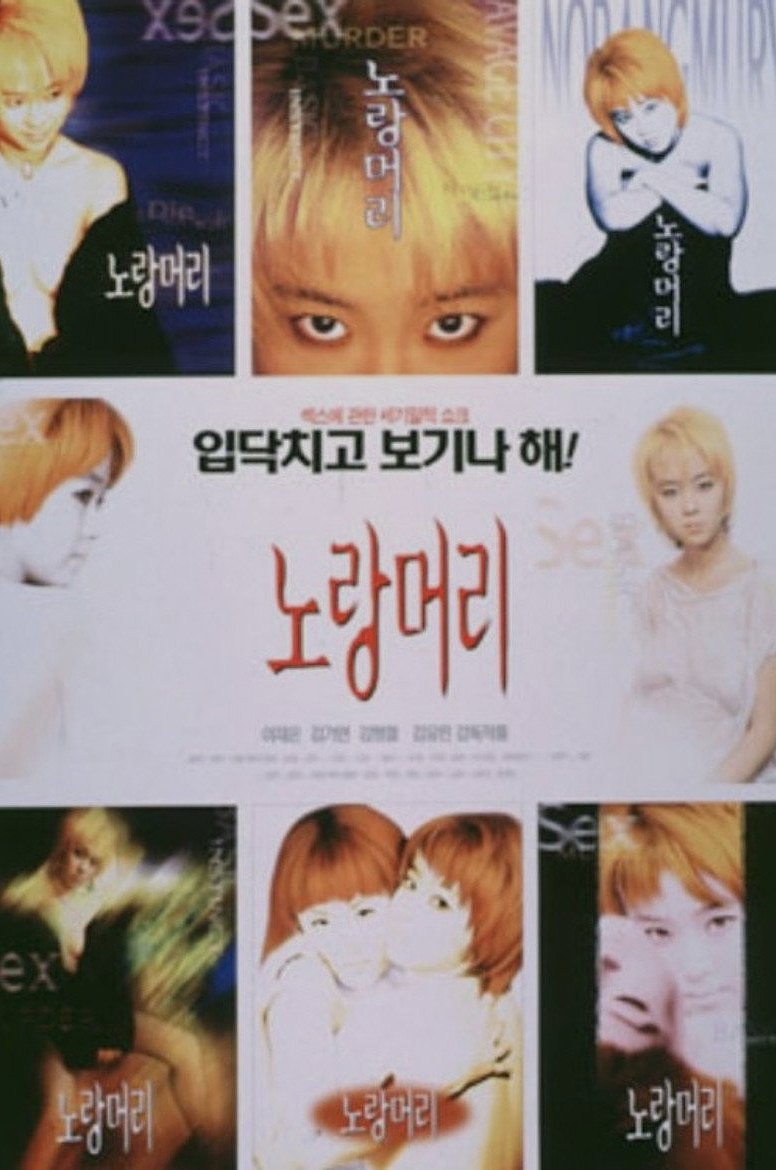
Yellow Hair (1999) is a Korean film that may not be familiar to Thai audiences, but it is one of the works that dares to address female friendship in the dark corners of urban society. The film follows the lives of Sang-hee and Yuna, two girls who meet in a nightclub and become close friends. But then love challenges their bond when the man Yuna loves still has feelings for his ex. They decide to eliminate the rival... but what will that action lead to? Find out in this review.
Plot Summary (No Spoilers)
Yellow Hair tells the story of Sang-hee (Kim Gi-yeon), a young woman who escapes her quiet rural life for Seoul. She doesn't regret stepping into the nightlife world, becoming a regular club-goer. In one club, she meets Yuna (Lee Jae-eun), a tough and bitter girl who has been physically abused by her father for years. They become close friends and live together amidst the lights and emptiness.
One day, they meet Young-gu (Hyeong-chul Kim), a man who seems perfect for Yuna, but Young-gu still has feelings for his ex. Sang-hee and Yuna decide to hunt down and eliminate the rival... The film unfolds with a gloomy atmosphere, raw emotions, and complex relationships between best friends who become rivals.
Acting and Characters
Kim Gi-yeon as Sang-hee portrays the transition from innocence to toughness interestingly. She shows the inner struggle of a woman seeking meaning in life amidst emptiness. Lee Jae-eun as Yuna creates a character that is both pitiable and frightening. She makes the audience feel the long-accumulated pain that turns into resentment.
Hyeong-chul Kim plays Young-gu, a seemingly gentle man who becomes a source of conflict. Though his role is not as prominent as the two women, he represents unforgettable love that drives the story. The performances of all actors intensify the film's emotions, despite some overacting at times, which suits the style of 90s films.
Direction, Cinematography, and Music
Director Kim Yu-min uses muted tones and dim lighting to create an atmosphere of the nightlife that is both alluring and dangerous. Club scenes are captured with a camera moving to the rhythm of the music, making the audience feel immersed. However, the overall cinematography may look dated and lack sharpness by today's standards.
The music fits the film's mood well, especially electronic and ballad tracks that enhance feelings of loneliness and longing. But at times, the music overwhelms the dialogue, ruining the experience. Some editing lacks continuity, particularly during transitions between day and night.
Editorial Analysis
Yellow Hair reflects the fragility of friendship when tested by love. Although the plot seems like a typical teen romance, it hides social issues like domestic abuse, escaping the past, and seeking love in the wrong places. The film makes you wonder if Sang-hee and Yuna's relationship is more than friendship. They rely on each other in a harsh world, but when a man's love intervenes, everything collapses.
The film's strength lies in its complex female characters, who are neither purely victims nor villains but people with both good and dark sides. However, the film clearly has budget and production limitations, making some scenes unrealistic and the pacing sometimes slow. Yet this is the charm of 90s Korean indie films that dare to tell stories mainstream films avoid.
Verdict
<p><strong>Yellow Hair</strong> is a film suitable for those who want to travel back in time to experience 90s Korean cinema and enjoy raw, straightforward storytelling. Despite technical limitations, the performances and themes remain interesting. If you are a fan of indie films unafraid of dated aesthetics and want to see a different perspective on female friendship, give this film a watch.</p>
👍 Pros
- +Intense and emotional performances by the lead actors
- +Atmosphere and color tones that effectively convey the nightlife world
- +Bold story reflecting social issues and female relationships
👎 Cons
- −Outdated cinematography and production techniques lacking sharpness
- −Inconsistent editing and music at times
- −Some dialogue feels drawn out and repetitive
Top Cast




FAQ
The film has no official Thai title, but fans often call it 'Norang Meri,' which translates to 'Yellow Head' or 'Blonde Hair.'
The film is a life and romantic drama with a gloomy atmosphere. It suits those who enjoy 90s Korean indie films and stories focusing on character relationships rather than action.
Yes, the film has scenes implying sexuality and intimacy, but not explicit nudity, focusing more on emotional expression.
No, it is an original screenplay written by director Kim Yu-min, not from a novel or true story.
The film does not have an official IMDb score, but on TMDB it has a rating of 5.433/10, which is average.